
HABLA MAMA IS NOW OPEN - Special bonus ends September 13th · 23:59

REPLAY - FREE WORKSHOP
STOP FEELING LIKE "THE FOREIGN MUM".
Be yourself in Spanish

If this felt like you, and you're ready to do something about it...
I'd like to introduce to you...
Habla MAMA
The Spanish language and coaching programme for international mums in Spain
Starts w/c 21st of September
Special bonus if you join by the 13th of September
The scene you already know
It's Monday. 09:00. School gate.
Backpacks hanging. Kids running. Someone calling your name from a distance.
And then it happens.
A mum walks up to you. She starts talking. And you smile before you understand. You nod before you know what you're agreeing to.
"¿Venís al cumpleaños mañana?"
For a second, everything goes quiet. You're not really listening anymore. You're translating. Searching. Hoping your face looks normal.
And at some point in that conversation… you disappear a little. Again.
Does any of this sound familiar?
"Sometimes I pretend to be busy on my phone so I don't have to do the awkward small talk."
"I'm tired of my child translating things for me."
"In my own language I'm funny, quick, opinionated. Here I sound like I've lost half my personality."
"I don't want to spend years living in Spain feeling like a background character in my own life."
If this felt like you, and you're ready to do something about it...keep reading!
It's not your brain. It's not your effort. It's not you.
The system wasn't built for you.
You've done the classes. Downloaded the apps. Tried to be consistent.
Nobody really tells you this: learning a language as an exhausted adult with children, responsibilities and probably a sleep-deprived brain has very little to do with memorising grammar rules.
The problem isn't that you haven't tried. It's that everything you've tried was built for someone else.
Apps for commuters. Grammar courses for students with two free hours and a quiet room.
Generic content about booking hotels and describing your hometown — while you're trying to understand what the teacher just said about your child.
You didn't fail the system. The system wasn't built for you.
Most Spanish courses are built around one idea: study enough, and eventually you'll speak. That's not how the brain acquires a language. That's how it passes an exam.
There's a difference between learning a language and acquiring one. And it's the difference that changes everything.
Acquiring happens through stories, repetition and hearing the same words in situations that are immediately relevant to your life, until they stop being "words" and start being just... thought. Not grammar in a quiet room.
The school gate conversation, the doctor's appointment, the birthday party you didn't know how to join.
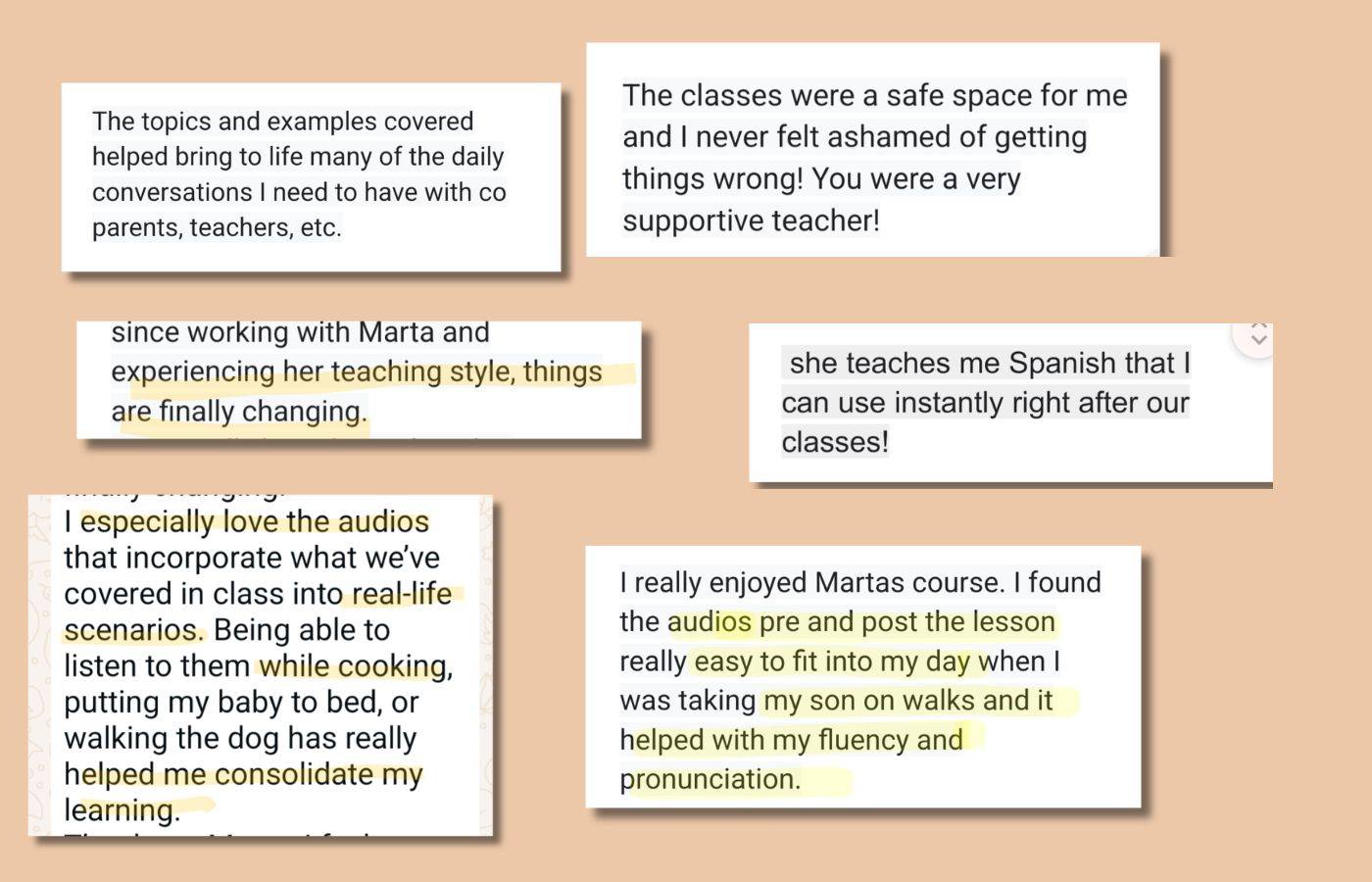
That's what Habla MAMA is built on. And because your life doesn't come with two free hours, the audios go with you: in the car, on a walk, while the kids eat breakfast.
Consistent immersion. Built around motherhood, not against it.
I know what you're going through.
Because I've been there too.

I raised my children in a language that didn't always feel like mine. And things didn't suddenly change when my English got better. They changed when I stopped trying to sound perfect — when I showed up anyway, even when it felt uncomfortable and messy.
That's when things started shifting.
Because here's the truth:
You don't need perfect Spanish. You need Spanish for the life you actually live as a parent.
How it works.
This is how Habla MAMA works
Habla MAMA is not just Spanish classes. It's a programme built around the real conversations and situations mothers face every day in a way that brings consistency without overwhelm.
You'll learn the Spanish you need to speak with doctors, teachers, other parents, shopkeepers and service providers, so you can navigate daily life with greater confidence and independence.
Because learning a language is easier when you're practising the conversations that actually matter to you.
- You listen first.
Before every live session, you get an audio and transcript with real situations from your life here. Your brain has already met the language before you try using it. Most women listen while doing ten other things at the same time. - Then we meet online once a week in a small group.
Maximum six women, all in the same situation as you. Through stories, repetition, role plays and conversations that actually sound like real life. You speak before you feel ready sometimes. You forget words. You laugh. You try again — much closer to how people actually acquire a language than sitting quietly doing grammar exercises. - After class, you get a consolidation audio.
The same story and key phrases again — so the language keeps sinking in naturally instead of disappearing from your brain the second the session ends. This is usually the moment women think: "wait… I actually understood that." - We work on the part nobody talks about.
The overthinking. The embarrassment. The weird feeling of becoming a quieter, smaller version of yourself in another language. Speaking more doesn't automatically fix that — we work on the emotional side of fluency, the blocks, the internal judgment, the freeze, so that when the moment comes, you show up. - You learn to read between the lines.
Understanding indirectness. Humour. Tone. Why "ya veremos" usually doesn't mean "we'll see." The cultural codes nobody explains but everyone somehow expects you to know — the stuff that makes the difference between translating words and actually feeling part of conversations. - You do it with other mothers who get it.
Being surrounded by women going through the exact same thing changes more than people expect. You stop feeling like the only one finding this hard. And that matters more than any lesson.
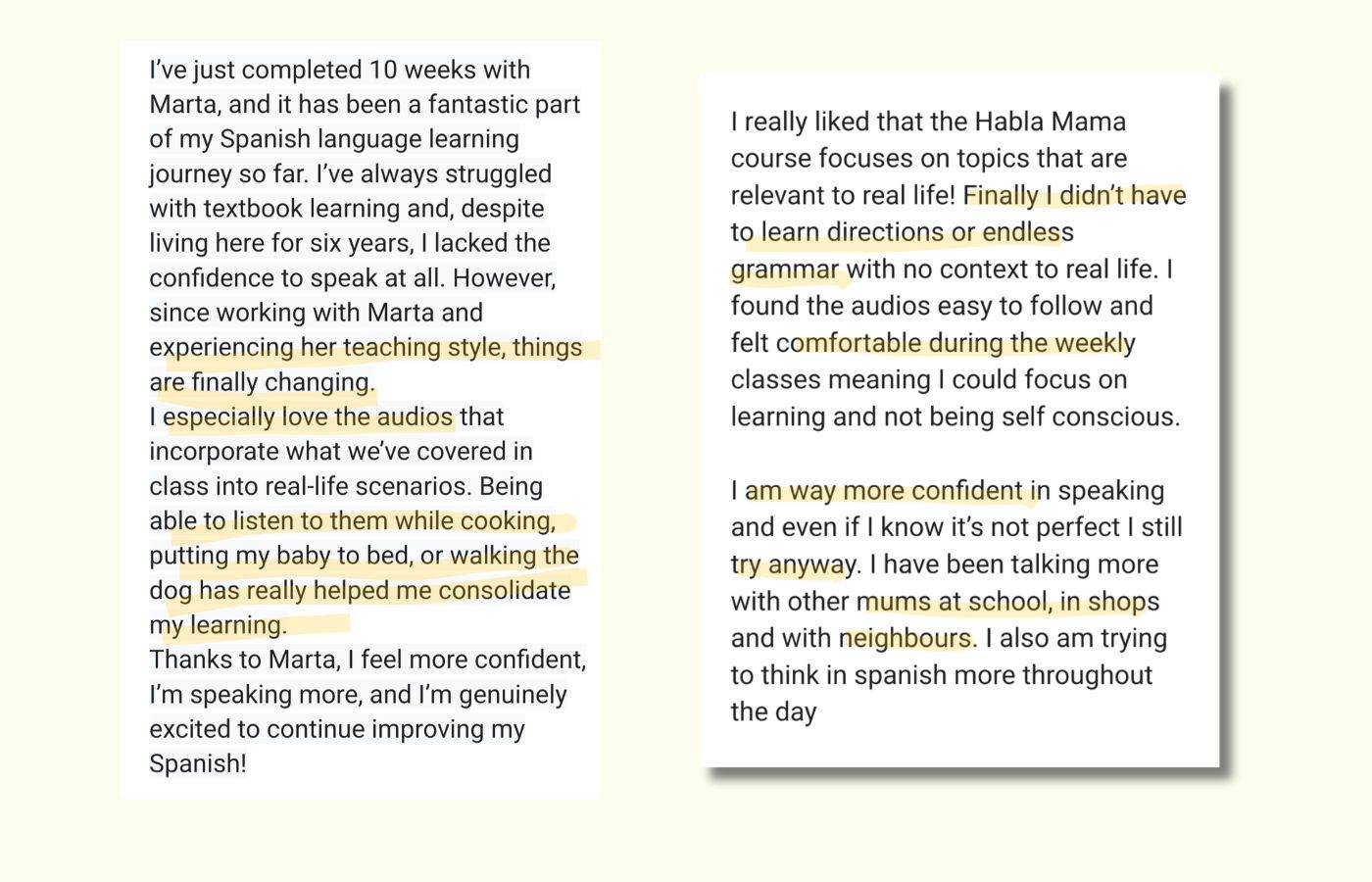
Before you ask about the live session schedule…
Don't worry. The programme is designed to offer flexibility and accommodate different schedules.
You'll attend one live class per week, scheduled within one of the available time slots below.
Live classes take place Tuesday to Thursday in small groups of maximum 6 people from 10:00 am to 17:30 (Madrid time)
Once you enrol, you will complete a short form to tell me about your availability and level, and I will place you in the group and time slot that best suits you.
This is what happens when you stop surviving conversations
And start the Habla MAMA journey.
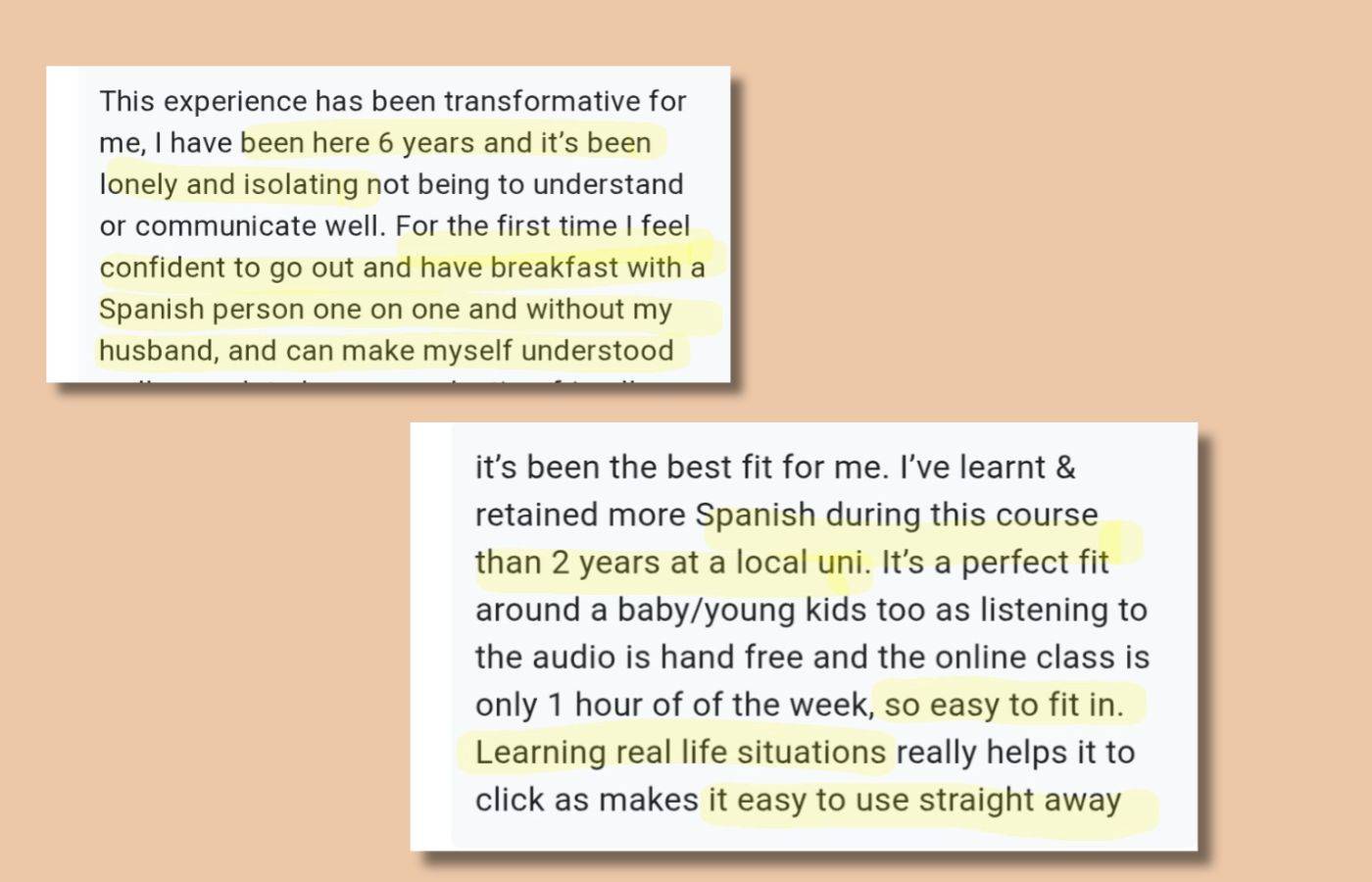
- You moved to Spain and expected the language to come with time — but it hasn't, not in the way you need it to.
Sound like you? Keep reading.
- You understand more than you can say, but when someone speaks to you unexpectedly, everything disappears.
- You've tried apps, classes or private tutors — and you're still in the same place.
- You're not looking for a certificate. You're looking to stop feeling like a background character in your own life.
There are two ways in — which one is you?
You've picked up words here and there
Maybe you started an A1 course once. You know "buenos días" and can order a coffee, but the moment a conversation goes beyond that, you freeze or smile and nod. You've been in Spain for months, maybe years, but your life still happens mostly in English: your job, your friendships, your WhatsApp groups. Spanish has stayed on the outside. This is where you start speaking it for real, in the situations that actually matter to you as a mother here.
Habla MAMA ConversationalYou know the grammar — but still can't speak
You've studied. You know the grammar. You can read menus, follow instructions, understand bits of conversation. But the moment someone speaks to you at normal speed, everything disappears. You still reach for the translator. You still wait for your partner to handle the difficult conversations. You still feel like a quieter, smaller version of yourself every time you have to speak. You don't need more grammar. You need to stop translating in your head and start actually being in the conversation. This is where that finally happens.
Habla MAMA FlowNot sure which one is yours? We'll figure it out together.
Send me a message →Join before September 13th and get a complimentary 1:1 personalised session
What's included
Everything the programme includes

Before each class
Weekly audio lessons + transcripts
Train your ear before class instead of being put on the spot cold. Most women listen while cooking, driving or cleaning up toys for the hundredth time — because real life doesn't pause for Spanish homework.

1 weekly · live
Small live group sessions
Stories, repetition and role plays based on situations you actually deal with here — school conversations, doctor's appointments, birthday parties, awkward WhatsApps, asking for help, handling conflict with your kids, all of it.

After each class
Post-class audios + transcripts
So the language keeps sinking in naturally afterwards instead of disappearing from your brain the second the Zoom call ends.

Inner work
Mindset & emotional coaching
We also work on the part nobody talks about — that voice in your head that says you sound stupid every time you make a mistake. Because you don't, and we're going to show you that.

Culture, not just language
Cultural & communication training
So you understand what people really mean — not just the literal words. Indirectness, humour, tone, social codes… the stuff nobody explains but everyone somehow expects you to know.

Never alone
A community of mothers
Going through the exact same thing, so you stop feeling like the only person finding this hard. Which honestly changes more than people think.

Between sessions
Ongoing support
For the moments where real life happens and you need help with an actual conversation, message or situation you're dealing with that week.

Real application
Fluency strategies + audio library
For moments where you didn't understand everything but want to keep the conversation going instead of panicking. A growing audio library so your brain absorbs Spanish naturally — including those verb endings that never seem to stick in traditional classes.

New · monthly
El café en español
A monthly live gathering designed to spark spontaneous conversations with other mums, offer personalised language coaching, and share practical strategies to build fluency and confidence.
This is what happens when you stop surviving conversations and start the Habla MAMA journey.
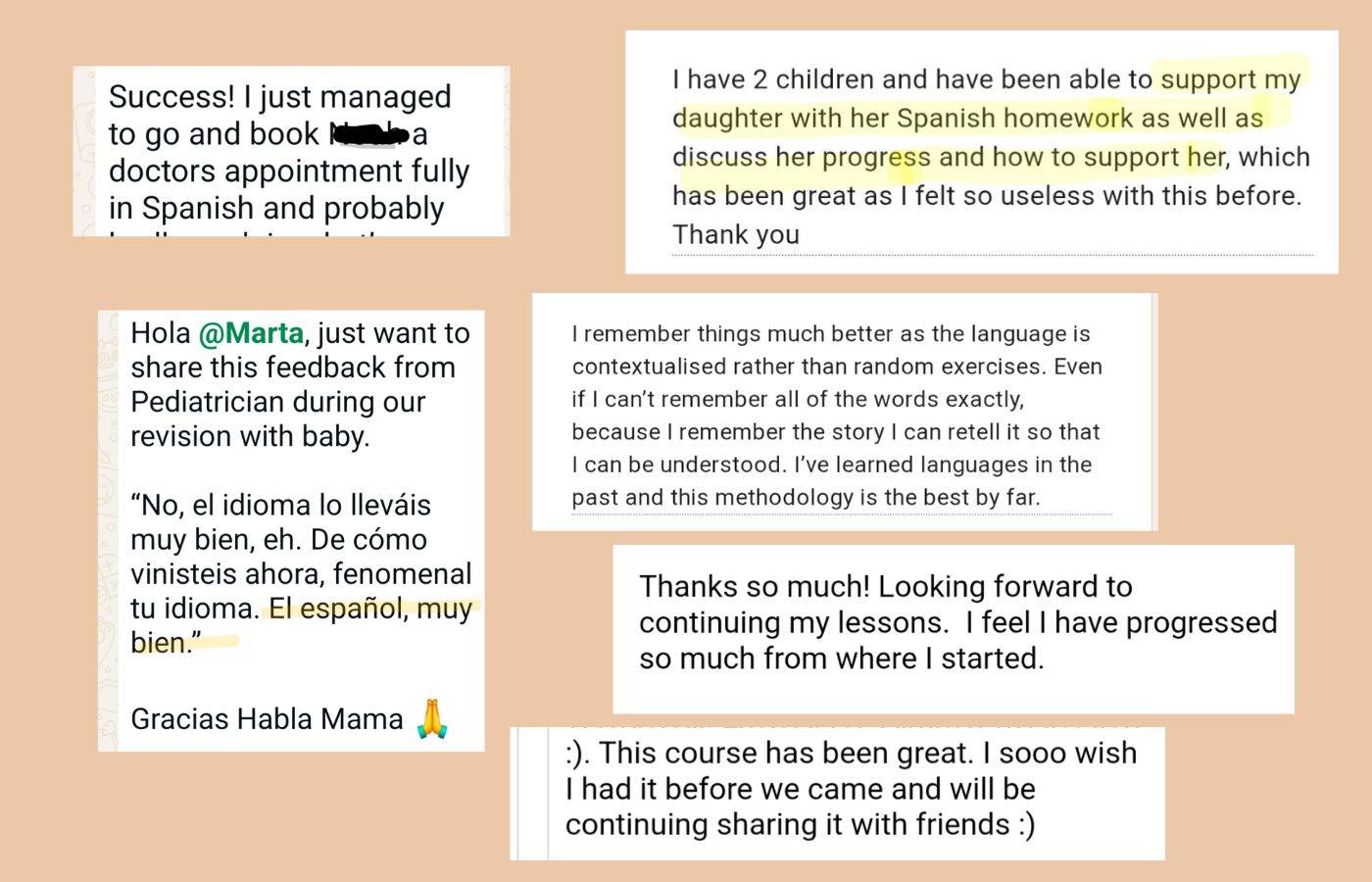
Ready to start feeling at home here?
Habla MAMA
6-month coaching and integration online programme
Start date w/c 21 st of September
🎁BONUS: complimentary 1:1 personalised session tailored to your specific goals.
Only for the first 5 women to join
If it's not for you, you have 15 days to ask for a full refund. No hoops, no explaining yourself.
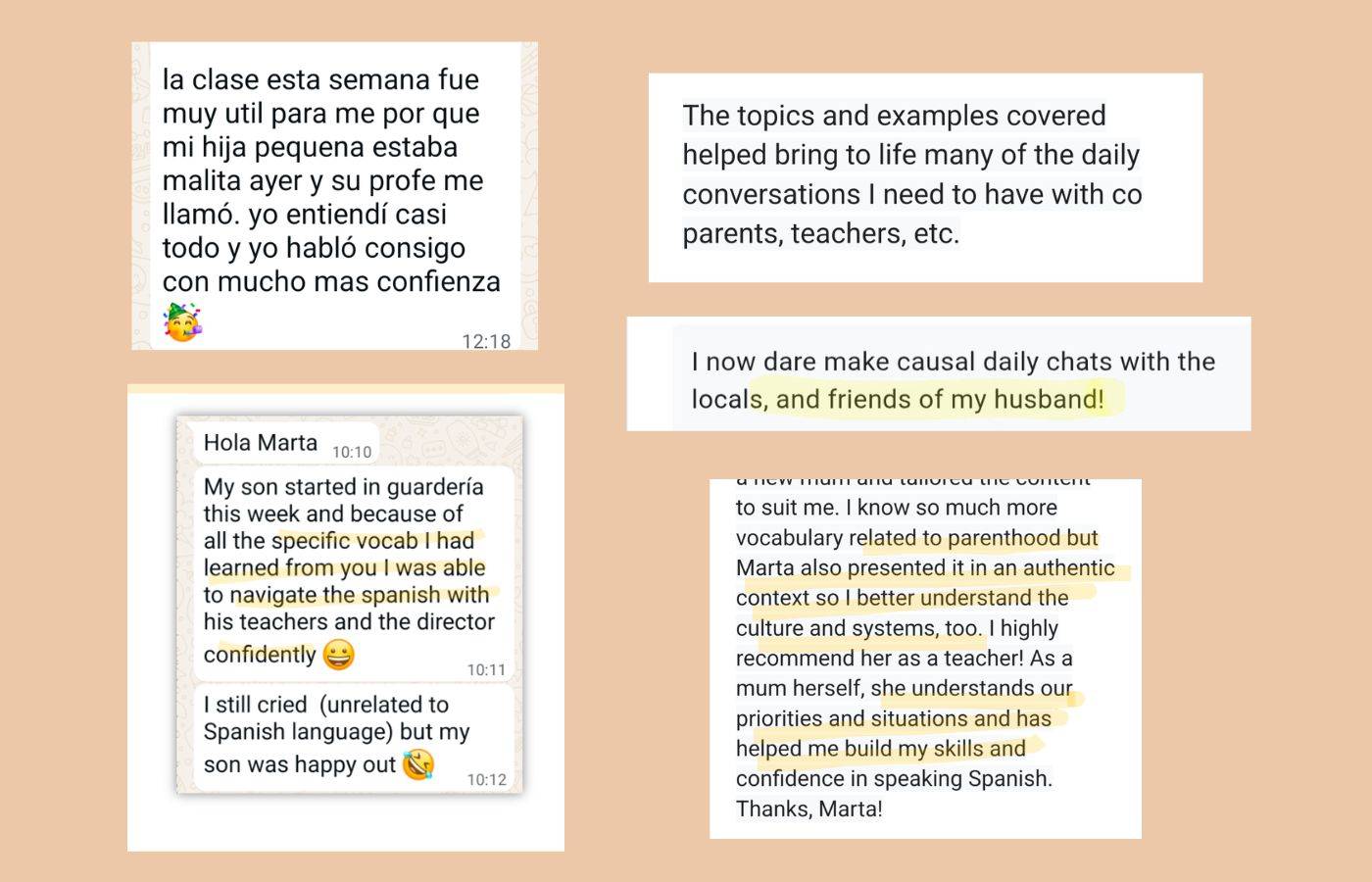
Still got questions?
What if I don't have time?
What if I can't make the live sessions?
How many people are in each group?
But I'm shy speaking in groups…
Can I join with my baby or child?
What time are the live sessions?
What if this isn't for me?
What makes this different from other Spanish courses?
Is this only for mums? Can dads join too?
I'm already doing another Spanish course. Is it still worth joining?

Who's on the other side
Hola, soy Marta
A language coach and a mum of two from Spain. I taught Spanish at Bristol University for more than a decade, then became a mum abroad myself — googling vocabulary before midwife appointments, leaving conversations wondering if I'd really understood.
Motherhood already comes with enough overwhelm. Doing it in another language just adds a whole new layer of stress and insecurity to everything.
That's why, when I moved back to Spain, I went back to study. Cognitive Grammar. TPR Storytelling. And I became a certified Neurolanguage Coach® accredited by the International Coaching Federation.
Because I wanted to teach the way I wished someone had taught me. Learner-centred. Emotionally aware. Built around your goals — not a textbook's. A space where you feel safe enough to open your mouth, make mistakes and keep going.
Imagine this
Listening to the paediatrician and not missing half the appointment because you were busy translating in your head.
Replying to the school WhatsApp group without opening Google Translate first.
Going to a birthday party and actually joining the conversation — instead of standing slightly outside of it, pretending to watch your child.
Understanding your neighbour at the door. Following the teacher's feedback without nodding and hoping for the best. Calling the doctor yourself. Feeling like yourself again — in the country you've chosen to call home.
That's what's on the other side of this.
You've been waiting for the right moment to start feeling at home here
This is it.
If it's not for you, you have 15 days to ask for a full refund. No hoops, no explaining yourself.
I want my voice back in Spanish →
Let's talk it through.
Or if you'd like to talk through your level and situation first, book a free 20-minute call. We'll figure out together whether this is the right fit for you, and which group makes most sense.